PDN


PDN
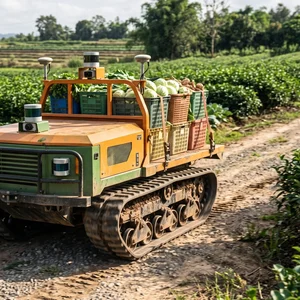
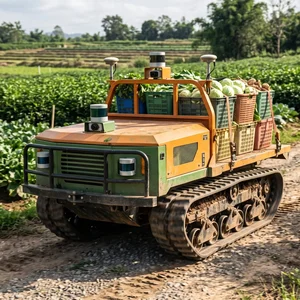
Electrically Powered Autonomous Harvest Transporter Tractor AMR/AGV
Rp 999
/ Set *Price excludes VAT.
1 Set
Minimum Order Price is not binding and may change at any time. Get the best price by clicking Request Quotation
- Stock 0
- Country of OriginIndonesia
- Shipped FromKab. Bogor
- Category
- Last Updated19 Oct 2026
Specifications of Electrically Powered Autonomous Harvest Transporter Tractor AMR/AGV
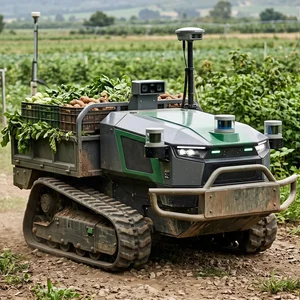
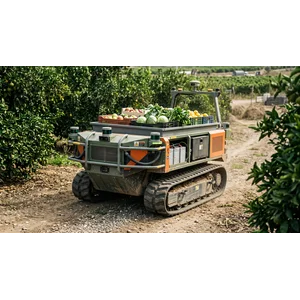
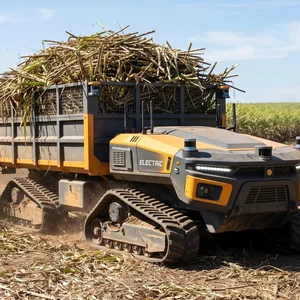
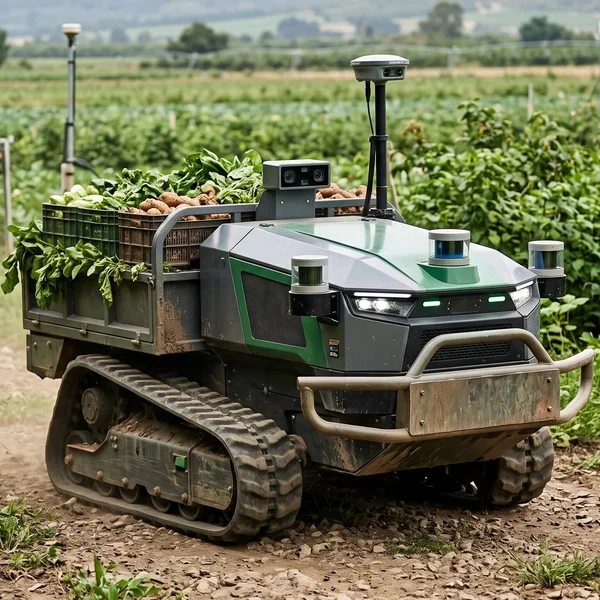
Explore a wide selection of Rice Processing Machine.The Autonomous Harvest Transport Tractor (an electric-powered AMR/AGV) is a modified version of a conventional agricultural transport vehicle—such as a crawler dumper or a mini-tractor—converted from an internal combustion engine (diesel/gasoline) to a fully electric vehicle, and equipped with autonomous navigation intelligence.
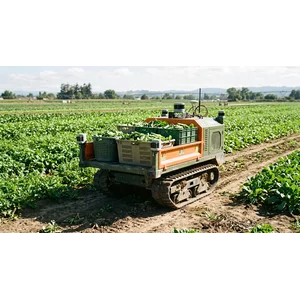
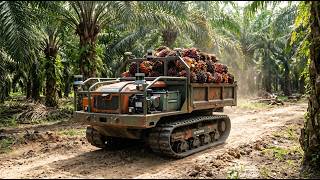
This vehicle functions as an autonomous logistics robot (Autonomous Mobile Robot or Automated Guided Vehicle) for use in open-field environments. It automatically traverses plantation paths, transporting large quantities of harvested produce from picking points within the fields to a designated collection point or warehouse, without the need for a human operator.
Below are the technical specifications and key advantages, which make this design highly suitable for development into an industrial-grade product:
Technical Specifications
1. Main Propulsion System (EV Powertrain)
Drive Motor
Utilizes a high-torque Permanent Magnet Synchronous Motor (PMSM), robust enough to haul heavy loads up muddy inclines.
Motor Controller
A high-precision motor controller manages acceleration, deceleration, and the independent movement of the left and right wheels (skid-steer system), ensuring smooth and stable vehicle kinematics.
2. Energy Storage & Battery Management System
Battery
Equipped with a high-capacity Lithium Iron Phosphate (LiFePO4) battery pack. This chemistry was selected for its superior safety (non-flammable) and exceptionally long cycle life, ideal for daily operations.
BMS & Charging
Features an advanced Battery Management System (BMS) to maintain cell balancing and prevent overcharging or over-discharging. The system can also be designed to support direct-current (DC) fast-charging standards (such as CCS2) to reduce charging wait times during the harvest season.
3. Autonomous Navigation & Perception System (AMR/AGV Mechanics)
Positioning
Utilizes an RTK (Real-Time Kinematic) GPS module, which provides centimeter-level positioning accuracy, ensuring the vehicle does not stray from the narrow paths within the plantation.
Obstacle Avoidance
Equipped with LiDAR scanners and ultrasonic sensors at the front and rear. If a worker, animal, or fallen tree is detected in its path, the system will automatically stop or calculate an alternative route (AMR behavior).
4. Chassis & Undercarriage
Equipped with a rubber crawler track system that distributes the vehicle's weight, preventing excessive soil compaction and avoiding slippage on wet or sloped terrain.
5. Telemetry & SCADA Integration
Features a communication module (LoRa or 4G) that transmits telemetry data—such as battery State of Charge (SoC), GPS position, and payload—to a local server or a SCADA system located at a guard post or control center.
Key Advantages
Significant Operational Cost Efficiency
By transitioning to pure electric power, the high and volatile costs of diesel fuel can be drastically reduced. Furthermore, the batteries can be recharged using energy from on-site solar panel installations (off-grid).
Reduction of Physical Workload
Field workers no longer need to carry heavy harvest baskets over long distances. Instead, they can focus on harvesting and placing the produce into the autonomous tractor’s cargo bed; once full, the vehicle travels automatically to the warehouse.
Precision and Safety
Unlike humans, who may experience fatigue or make errors (such as colliding with crops), an RTK-GNSS-based precision navigation system ensures the tractor remains strictly on its intended path, protecting crops from mechanical damage.
Emission-Free and Quiet
The absence of a diesel engine eliminates toxic exhaust fumes and noise pollution, making the system ideal for organic farms or enclosed greenhouse environments.
Simplified Maintenance
Electric vehicles contain significantly fewer moving parts compared to conventional internal combustion engines. There is no longer a need for routine oil changes, fuel filter replacements, or repairs to fuel injectors—components that are otherwise prone to failure in the field.
Product Images
Can't find the product you're looking for?
Request a quotation now
Request a quotation now
Request Quotation
Company Details
Founded In
2025
Business Field
-
Number of Employees
-
We Sell
Early Warning System,Seismograph Digital,IoT Pertanian,Speed catcher monitor,Paket PLTS,Mesin Industri Custom/Standar
Company Profile
PT Karta Nagari Grup bergerak di berbagai bidang yang fokus pada teknologi dan rekayasa. Perusahaan ini menawarkan solusi lengkap yang mencakup beberapa sektor utama.
Secara spesifik, bidang usaha Karta Nagari Grup meliputi:
Kontrol Spesial & Prototipe: Pengembangan sistem kontrol khusus dan pembuatan prototipe untuk berbagai kebutuhan industri.
IoT dan Otomasi: Menyediakan solusi berbasis Internet of Things (IoT) dan sistem otomasi untuk meningkatkan efisiensi proses industri.
Energi Terbarukan: Berfokus pada Pembangkit Listrik Tenaga Surya (PLTS) atau panel surya, serta solusi penyimpanan energi seperti power wall dan stasiun pengisian daya.
Sistem Peringatan Dini (EWS): Pengembangan Early Warning System untuk berbagai keperluan mitigasi bencana atau kebutuhan spesifik lainnya.
Otomotif dan Transportasi: Terlibat dalam pengembangan kendaraan listrik, termasuk motor dan mobil listrik, serta inovasi di bidang transportasi seperti taksi drone. Mereka juga memiliki portofolio dalam bentuk bengkel mobil listrik dan hidrogen (FCEV).
Teknologi Digital: Menyediakan layanan di bidang teknologi digital yang mencakup animasi dan pengembangan kecerdasan buatan (Artificial Intelligence - AI) yang terintegrasi.
Pelatihan: Menyelenggarakan program pelatihan di bidang teknologi dan rekayasa (engineering).
Read More More From Rice Processing Machine
Contact Supplier / Seller

PT. Karta Nagari Grup
Online 2 Hours Ago
 Verified Supplier
Tax Status: Not VAT-Registered
vila bogor indah 5
Kab. Bogor, Jawa Barat
Kab. Bogor, Jawa Barat
More Products From PT. Karta Nagari Grup
Rp 999
Category
Update
19 Oct 2026
Min Order
1
Rp 999
Category
Update
19 Oct 2026
Min Order
1
Rp 999
Category
Update
18 Oct 2026
Min Order
1
Rp 999
Category
Update
17 Oct 2026
Min Order
1
Rp 999
Category
Update
17 Oct 2026
Min Order
1
More Products

Request a quote
Category
Update
2 Oct 2026
Min Order
1
Rp 17.837.838
Category
Update
28 Sep 2026
Min Order
1
Request a quote
Category
Update
22 Sep 2026
Min Order
1
Request a quote
Category
Update
18 Sep 2026
Min Order
1

Request a quote
Category
Update
15 Sep 2026
Min Order
1
Electrically Powered Autonomous Harvest Transporter Tractor AMR/AGV
Total Price
Rp 999
Rp 999
Request Quotation